Monday, February 11, 2013

Country Profile: The Republic of Cameroon

Cameroon Flag
Photo Credit: CIA Factbook
Cameroon, Africa
Photo Credit: CIA Factbook

History


Pre-colonization
The Bakas (pygmies) were the earliest inhabitants of Cameroon and still inhabit the forests of the south and east provinces. The Portuguese arrived along the coast in the 1500s but malaria prevented significant European settlement and conquest of the interior until much later. In the late 1770s and early 1800s, pastoral Islamic people of the western Sahel known as the Fulani, took over most of what is now northern Cameroon. In doing so they displacing its largely non-Muslim original inhabitants.
Colonization
In 1884, all of present-day Cameroon and parts of several of its neighbors became a German colony with a capital first at Buea (where I will be living) and later at Yaoundé. After World War 1, this colony (and many other under German rule) was divided between the UK and France under a June 28, 1919 League of Nations mandate. A strip of land bordering Nigeria from the sea to Lake Chad was ruled by the British from Lagos (Nigeria) as British Cameroons. France gained a much larger chunk of land and ruled from Yaoundé as French Cameroons. An armed struggle for independence in French Cameroon began in 1955 by the outlawed Union of the Peoples of Cameroon (UPC), based largely among the Bamileke and Bassa ethnic groups. Death totals range from tens of thousands to hundreds of thousands.
Post-colonization
Finally gaining independence January 1st, 1960 the French Cameroons because The Republic of Cameroon. In 1961 the British Cameroons received their independence; both regions joined together to become the Federal Republic of Cameroon. A French-educated Fulani named Ahmadou Ahidjo was chosen President in 1961. He outlawed all political parties but his own in 1966 and suppressed the continuing UPC rebellion. The federation was replaced with a new constitution and a unitary state and the country began to set down the path towards a multi-party democracy. Ahidjo resigned as President in 1982 and was constitutionally succeeded by his Prime Minister, Paul Biya. There was a failed attempt of a coup to overthrow Biya in 1984. Biya won single-candidate elections in 1984 and 1988 and flawed multiparty elections in 1992 and 1997.


Government   


Cameroon, formally known as the Republic of Cameroon, is a multiparty presidential regime headed by one chief of state (President) and one head of government (Prime Minister). The legal system is primarily that of the French civil law but also includes some English common law and their own customary law. The government also includes a Cabinet (a group of high-ranking officials who representing the executive branch). Prospective Cabinet members are submitted by the Prime Minister to the President who makes the final decision and appoints all Cabinet members. The National Assembly has 180 seats and members are elected by direct popular vote to serve five-year terms. The president has the power to lengthen or shorten the term of the legislature. Note: the constitution calls for a Senate (an upper chamber for the legislature) but it has yet to be established. Cameroon also has a Supreme Court consisting of judges appointed by no other than the president himself. The Supreme Court highest court existing in the country and is subject to the oversight of only the High Court of Justice which consists of nine judges and six substitute judges and is elected by the National Assembly. Note: from the most current information I could find, all members of the Supreme Court and the High Court of Justice are male.

Paul Biya has been sitting as chief of state and President of Cameroon since 1982. The president is elected by popular vote for a 7 year term. Note: in 2008 there was a constitutional amendment which eliminated term limits for the President. The last elections where in October of 2011 so the next ones wont be until October 2018. In 2009 Philemon Yang was chosen to be the Prime Minister and head of government by, surprise surprise, the President himself.

The populatoin showed wide skepticism of the fairness and lawfulness of the election in general and many were hopeful that a new leader would be elected in 2011. But, evidently, Biya was able to defend his position with 78% of the vote in an election that had 'numerous irregularities'.


Economy    


Cameroon is classified by the World Bank as a lower middle income country and economically, is both a relatively poor country in terms of development and economic standing. However, Cameroon is a mineral rich country and depends a great deal on commodity exports and in a perfect world it would undoubtedly be classified as a developed country because of its wealth of resources. Note:  "The Resource Curse" as it has been called by scholars is a whole different topic and I won't get into that here.

Cameroon's largest exports are crude oil and petroleum products, lumber, cocoa beans, aluminum, coffee and cotton and has a total export volume in excess of US $4.8 billions (2008). The nation's imports include machinery, transport equipment, fuel, food and electrical equipment. Cameroon's main trading partner is the European Union, accounting for 41.1% of total imports and 55.1% of exports.

The GDP (gross domestic product aka value of all final goods and services produced within a nation in a given year) of Cameroon is $50.32 billion, which isn't bad for Sub-Saharan Africa. Cameroon boasts about having 'the best-endowed primary commodity economies in sub-Saharan Africa' but its population has very little to show for this accomplishment. More than 48% of their population lives below the poverty line. One reason for this could be the rampant corruption throughout the country. Transparency International ranks Cameroon 144th out of 174 countries for transparency. Note: 174 = the most corrupt state: Somalia, North Korea and Afghanistan tied for that prize. As for the 70% of the population that is employed (yes that's right, the unemployment rate is 30%) 70% of them work in agriculture, 17% in services and 13% in industry.

Although many economists and scholars prefer to use figures such as GDP to assess a countries development, I personally believe that the The Human Development Index (HDI) is a much more accurate depiction of development and progress. A major problem with looking at economic figures is that as a countries GDP and other factors are rising - the people in the country might not be getting the 'trickle down effect' of the economic progress. The HDI a summary measure for assessing long-term progress in three basic dimensions of human  development: a long and healthy life, access to knowledge and a decent standard of living. It is used and recognized by the United Nations Development Program (UNDP). Cameroon is said to have a low human development and ranks 151 out of 187 countries. Read more about the assessments used to calculate a countries HDI and Cameroon's HDI here

Side note: here is one of the most insightful and fascinating videos I have ever seen explaining global poverty. Please, take a look! It is a bit dated (2007) but without a doubt still relevant and interesting.

Because of the Chad-Cameroon pipeline and energy provider AES Sonel, the United States is now leading investor in Cameroon. China has recently become the number one importer of Cameroonian exports, especially unprocessed timber. There are many reports (just a few here: one, two, three, four and five) of massive clear-cutting in the northern region of Cameroon leading to major environmental degradation, deforestation and the threatened extinction of not only animals, but also of the pygmy tribes in Central Africa. There is more information on China's relationship with Cameroon and what it could potential lead to here. Thank you WikiLeaks.


Military


The Cameroon Armed Forces are under the responsibility of the Chief of Staff, Nkoa Atenga. The Armed forces, consisting of between 38,000-40,000 men and women, include three branches: the Army, the Navy (including naval infantry) and the Air Force. There is no compulsory enlistment, everything is on a volunteer basis but it is a four-year obligation and both male and females must have a high school diploma.

As confirmed by a US diplomatic cable that was made public by the beloved WikiLeaks, "China has an ongoing military-military relationship with Cameroon, which includes training for Cameroonian military students each year in China, technical advisors to assist in repairing Cameroonian military vehicles and naval vessels, and Chinese military sales."

Because Cameroon Armed Forces does not have operational experience against other forces, it is not possible to assess its ability to respond to changing threats, opposing tactics nor its willingness and capacity to use military force. The good news is, they have sent special forces to the North to protect against poachers entering from Chad and Central African Republic. Last year, over 200 elephants were slaughtered by poachers - Cameroon special forces are hoping to prevent a repeat.

Culture


There are approximately 250 different ethnic groups in Cameroon. The largest groups are Western Highlanders/Grassfielders (Bamileke, Bamoun) found in the Northwest making up 38%; Kirdi (non-Islamic Northerners) found in the Northern Desert/Central Highlands region making up 18%; Southern Tropical Forest Peoples  (Beti group: Ewondo, Eton, Bane, etc) located in the South making up 18%; Fulani (Islamic Northerners) found in the Sahel/Northern Desert making up 14% and Coastal Tropical Forest Peoples (BassaDuala, etc.) found in the Southwest making up 12%.
[FYI: other statistics show: Cameroon Highlanders 31%, Equatorial Bantu 19%, Kirdi 11%, Fulani 10%, Northwestern Bantu 8%, Eastern Nigritic 7%, other African 13%, non-African less than 1%]
Cameroon Ethnic Make up and Location
Photo Credit: Stanford University


As reported by the Ethnologue: Languages of the World, There are 286 individual languages listed for Cameroon. Of those, 278 are 'living languages' (meaning that there are continuously people speaking them), 3 are second languages (without mother-tongue speakers), and 5 have no known speakers (meaning it could be/probably is a dead language). Cameroon is officially a bi-lingual country with English and French as it's two official languages.

Jungle road from Nigeria to Cameroon
Paul on the jungle road.
There is no official religion of Cameroon and I found many reputable statistics to be conflicting. Cameroonians have a variety of religious beliefs, and many individuals combine beliefs and practices of world religions with those of their own culture groups. Between 40-50% of the population are members of Christian denominations, about 25-40% practice mainly "traditional" religions, and approximately 20% percent are Muslim. Most Christians live in the southern areas, and most Muslims in the north. This religious diversity hasn't caused violent clashes like in other neighboring countries. In many African countires, Cameroon included, Christian missions constituted an informal second layer of colonialism. They did quite a bit of brainwashing while doing their best to destroy traditional religious practices - I have witnessed people now have the mentality of "Pray and something will happen". Not saying its a good or bad thing, but after my experience at a church in Uganda, I am not a huge fan of the legacy that I see left by the missionaries.

Cameroon hosts some 104,000 refugees and asylum-seekers according to the United Nations Higher Commissioner of Refugees who keeps very up to date statistics. The refugees and asylum seekers are mainly from the Central African Republic and Chad with a handful from Nigeria and Guinea. Although there has been some rise in the prices of commodities, these number do not constitute a 'refugee crisis' and there are no major conflicts or issues arising from it.
Photo Credit: UNHCR
The value and moral system of Cameroonians is similar the rest of Africa - Family is number one. Extended family (grandparents, aunts, great-uncles, cousins, etc) are treated like the nuclear family. The idea of a nursing home or retirement home is a foreign concept and the young are expected to care for the elders in their family. In many family orientated cultures like Cameroon, nepotism (the practice of favoring relatives or friends) does not have the negative connotation. I'm sure you can imagine the problems that might arise from this but nevertheless that is the way of the land.  It is very common to hire relatives and is actually part of the cultural because it helps provide for the family.

There are different greetings in Cameroon depending on the region. Handshakes are most common but sometimes it is more than the traditional Western handshake many of us are accustomed to. One popular method of handshaking is followed by a snap of the other persons middle finger with their thumb as they pull back their hand. You get used to it after a while; it's actually pretty fun :) Also, you might find someone greeting you by a small embrace while brushing cheeks and kissing the air (like in France). Note: ALWAYS use your right hand - left hand is considered 'dirty' and used for the bathroom and other 'dirty' things. This goes for giving/handing things to others as well - always use two hands or only your right hand. Also note: some Muslims might not shake hand of a women.

Cameroon Market Day
When entering someones house, always take your shoes off outside (or follow the lead of the person who is entering in front of you). At meals, most Cameroonians eat with their hands. As a guest you might be offered silverware - its up to you if you want to use it, I personally always decline. Again: eat with RIGHT hand ONLY!

 When in doubt, just observe what others are doing and try to emulate their behaviors.


Geography    

Buea (where I will be living) is to the West of Douala
Photo Credit: CIA Factbook

The land mass size of Cameroon is just slightly larger than that of California in the US. Cameroon is considered to be in Central Africa but it is also sometimes considered West Africa. It is bordering the Bight (Bay) of Biafra/Bonny of the Atlantic Ocean and has over 400km of coastline. It borders Equatorial Guinea, Gabon and the Democratic Republic of the Congo to the South, Central African Republic and Chad tot he East and Nigeria to the North-West.

The obvious low point is the Atlantic ocean and the highest point is Fako (4,095 m) on Mt. Cameroon which also takes the gold for the highest peek and the most frequently active volcano in West Africa. It last erupted in 2000. There is volcanic activity with periodic releases of poisonous gases from Lake Nyos and Lake Monoun. In 1986 lakes in Oku volcanic field released fatal levels of gas killing some 1,700 people.
Mount Cameroon
Cameroon is often referred to as "Africa in miniature" because of its huge range of diversity. In addition to the ethnic and cultural variation previously mentioned, this country is also home to an assortment of different terrains and temperatures. You will find it all in Cameroon: hot, cold, wet, very very wet, dry, tropical rainforest, desert, beaches and mountains.


Other Information and resources not linked in main article:
BBC's Timeline of Cameroon
Anthropological Study of the Pygmies (<--amazing work, very interactive/interesting)
CIA World Factbook: Cameroon
Michigan State University: Global Edge
Economy Watch 

Thursday, January 24, 2013

Bienvenue à Montréal!

Bienvenue à Montréal! (eng: Welcome to Montreal!)

After spending two short days with my Aunty Patty in Toronto, I headed to Montréal taking my first train with ViaRail!
The 5hour ride build up my anticipation even more.
Aimée met me at the train station. We took the metro to the house.
Home sweet home
I was quite afraid of the snow and cold in the months before arriving...


But I have to say...it's not that bad.

International Language School of Canada: A world leader in language training.
It took no time at all for me to remember what it was like to be a student with no time, no money and too many things to do. Luckily, I have been able to make a little bit of time to roam the city and explore.
allows visitors to walk through replicas of four ecosystems found in the Americas INCLUDING the animals found in them:
1) The Tropical Forest is a replica of the South American rainforest.
2) The Laurentian Forest is a replica of the North American wilderness.
3) The Saint Lawrence Marine Eco-system is an estuary habitat modelled on the Gulf of Saint Lawrence.
4) A polar area that is divided into Arctic and Antarctic.


A must see place if you ever visit the city! So much fun and so much to see!!

In addition to my full time intensive study (M-Th 9am-4pm/F 9am-noon) I signed up for night classes at ILSC which are M&W from 6-8pm. I also took advantage of free conversation classes at La Grande Bibliothèque (eng: The Large Library) every Th from 6-8pm.

I took a day-trip with the school and some friends to visit the country's capital city.
Ottawa is only 1h45m from Montréal.
The Capital of Canada - - Ottawa City
The Canadian Museum of Civilization - A national museum of social and human history.
The "grand hall" explored the rich cultural heritage of the Aboriginal peoples of Canada's West Coast. Beautiful art work and wood carvings.

The "first peoples hall" shows the history of the first known inhabitants of the region. It was fascinating to see their way of life, I especially enjoyed the clothing. But, it was sad to see how their way of life was destroyed and devalued throughout history. They were forced to conform to the "less savage" practices of the new settlers.
Left photo shows a young boy upon his arrival to a new Industrial School, the
right photo shows him in the school uniform and cut hair (obviously mandatory).
The largest exhibition was "Canada hall". You could literally travel across the country in life-size settings (houses, pathways, etc) and experience 1,000 years of history.

Lastly, there is a "special exhibition gallery" that is changed every few months. I was fortunate enough to be there during the Vodou (as apposed to the English/American spelling: voodoo) exhibit which was of high interest to me after especially after my experiences in West Africa. This specific exhibit focused on Haitian Vodou, but I do believe the majority of that came from the Dahomey Kingdom in West Africa. Disclaimer: Although the media has portrayed Vodou in a very stereotypical and negative light, it is much more than that.

There was no photos allowed in the exhibit, thus, this is my only one.
Short history and some interesting facts I learned about Vodou:
Between the 16th-18th century, millions of Africans were uprooted from their home and transported on ships (part of the Transatlantic Slave Trad) to the Caribbean. Despite having Christianity forced upon them to the point where all religions other than Catholicism were banned, and those who disobeyed would risk severe punishment and even death, African slaves refused to give up their ancestral religions. Maroons are slaves who escaped from the plantations and sought refuge and protection in the mountains and forests. The number of maroons grew and this is, for the most part, how Vodou culture and traditions stayed alive. Vodou (traditional West African) began to merge with Christian elements and formed the Haitian Vodou we have today. This religion soon became an identity for the slaves and a source of resistance. 
Photo Credit: Ottawa Citizen and Krunn's Sit
Vodouists worship only one god, Gran Mèt (Great Master). Lwa is a Vodou spirit (and there are many). You must communicate with the lwa in order to enter into commutation with the active energies emanating from the Gran Mèt.
Bodies of water, forests, trees, caves, cemeteries, and crossroads are used to communicate to the lwa, but the preferred method of communication is through dreams.
Communication with the lwa is at the heart of the religion. To Vodouists, everything in the world that exists is interconnected - nothing can exist on its own separate from other things. Therefore, communicating with the lwa is crucial for maintaining or restoring balance in your world.
Several different lwa - Photo Credit: Krunn's Site
Each lwa is called and welcomed with different drum rhythms, prayers, dances, colors, fragrances, songs and vèvè (sacred symbolic drawings) - all specific to him or her.
Possession is a powerful way to communicate with the lwa. When people are possessed,  the lwa speaks and moves through them. It expresses itself, advises, consoles, talks to others, reprimands, punishes, encourages or heals them. Possession is not out of the ordinary and can last from a few minuets to several years.
Outdoor Vodou Ceremony - Photo Credit: Krunn's Site
I could go on, but I think all of this information will be enough to process for now.
I feel like I better understand the ceremonies I saw in Africa. Although the Ndep (like a modern day exorcism) was in Senegal (not part of the Dahomey Kingdom), I feel like it could have some how related to these beliefs.
After the Museum we headed into the city and into the market. I tried the overpriced famous "Obama Cookie"...in my opinion, it was just like his presidency - I was not very impressed. I moved on quickly to a garlic butter and cheese Beaver Tail!

Here I am eating my 'beaver tail' - a local favorite!
The largest skating rink in the world, the Rideau Canal, was closed because it had been pretty warm out the previous days and the ice wasn't think enough, so we just strolled around town for the rest of the day and then headed back to Montreal.

Back to school, back to the books, back to reality.

It was really cold this week, as you can see. Thursday, the electricity went off at about 11am in school. Because it didn't go back on, they cancelled classes for the afternoon and I went to the Redpath Museum.


The Museum located right on McGill campus!
The first floor "back to the sea" was an exhibit on marine vertebrates whose ancestors were terrestrial (animals that live predominantly or entirely on land). The ancestors of all reptiles and mammals came from the sea. There was everything from whales, seals and sea turtles to extinct marine reptiles that lived at the same time as dinosaurs! This display shows the diversity of the sea floor in the region of Montreal during the Ordovician period, 450 million years ago.


The second floor, 'dawson gallery' which uses fossil specimens to show some of the most remarkable events in the history of life on Earth: from the earliest trace fossils in the Ediacaran of Newfoundland, to the strange creatures of the Burgess Shale that arose from the Cambrian explosion in the Rocky Mountains. There were tons of specific exhibits including a collection of African culture, footbinding practices and shrunken heads from Amazonian tribes.


Shrunken head used for trade with white settlers.
Explanation of footbinding:
 
Foot and shoe of a 15year old
(literally 3inches big.

The weekend is nearly here and I will pass most of my time studying and staying warm! There are a few sights I have on my list for Montréal, but it is so cold out that I think I might wait until it gets into the double digits!

Monday, December 31, 2012

Pre-Departure Build Up

After all the motivating, working hard, budgeting and planning that has taken place since September 2012, it was time for me to pack up and head out to begin writing the blank pages in the next chapter of the book called "My Life".
Last year's study abroad program and overland travels [13 countries, 12 credits, 9 months] required an immense deal of planning. From HSU campus bureaucracy and approval to scholarship and visa applications to obtaining a 'temporary secondary passport', I could have joined the circus after all the flaming hoops I had to jump through. Which is why I highly recommend taking the ease and stress off by starting the planning early.

This time around, I had less time, less things to do and fewer destinations. I began searching for internships in September with the requirements being a grassroots organization that focuses on social justice, human rights (specifically women's rights) and/or poverty alleviation in the Republic of Cameroon.

Using the F A N T A S T I C book my Aunty Patty bought for me, The Big Guide to Living and Working Overseas, I attempted to perfect an international curriculum vitae [way harder than I thought] and individual letters of motivation/cover letters to send to potential internship organizations. This is what I ended up with:
Two had internships in place, another nine or so accepted volunteers and a few such as UNICEF didn't mention anything other than activities and office location. I applied to 13 of these in December and began receiving feedback by 12 Dec. Things were looking good.

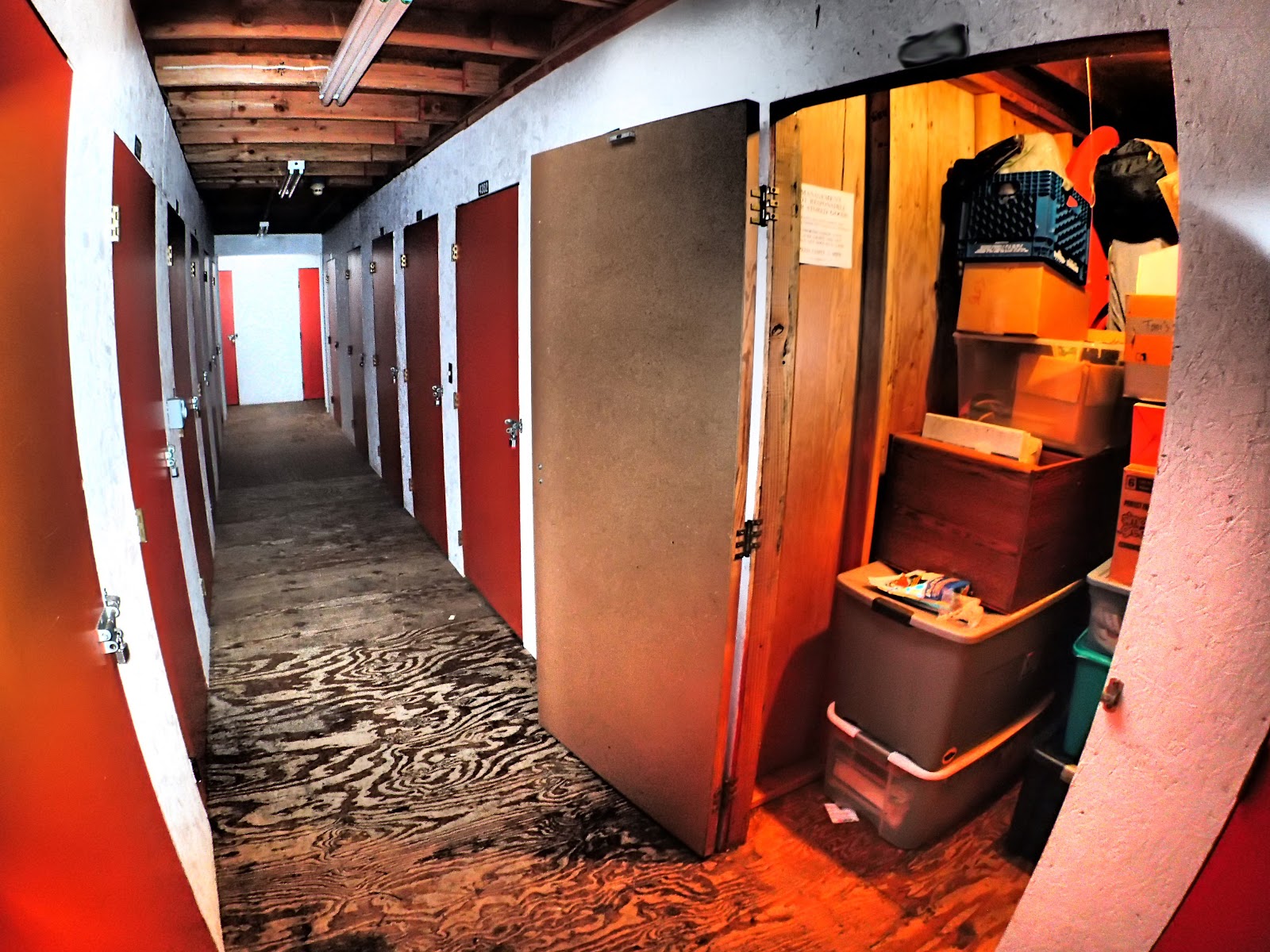
Storage Unit/Month = $41
Cheaper than rent!
Storage unit, on the second floor, around two corners.
Photo Credit: Paul Gamache

See ya next year!
Photo Credit: Paul Gamache

After some good quality family and friend time, and a little bit of snow shoeing...

Snowshoeing around my parents property on the Montreal (Wisconsin) River
...I decided to choose Social Development International (SDI), a small NGO in Buea, Cameroon. I will be working as their Community Service and Development Intern from March-August 2013.

Social Development International
As part of their team, I will be expected to identifying community issues, needs and problems; developing new community-based programs and resources; evaluating and monitoring existing programs; enlisting the cooperation of government bodies, corporate bodies, community organizations and sponsors; raise public awareness;recruiting and training voluntary staff; fundraising for community activities; planning, coordinating, attending meetings and events, and encouraging participation in activities. WOAH! That's a mouthful. I accepted this offer on Christmas Eve :)

DO NOT wait until the last week or even month to start dealing with visa stuff. Sometimes you need a lot of things which can take a while to set up and collect. Always check with the country embassy in your home county for correct up to date requirements! 
For example, the Cameroon Embassy in Washington DC website tells you everything you need to know. If you have many places (more than 3 or 4 countries) that you need to get visas for, I suggest paying a little extra to have a service company such as Dukes Visa Services do it for you.
All documentation less the USPS money orders of $275!

Two days until Canada.
Six days until French classes at ILSC-Montréal.
Sixty-seven days until I see Paul and arrive in Cameroon, West Africa. 

Happy New Year!

My new year's resolutions: 

1) More yoga and meditation: I want to delve deeper into myself and the world around me. I want to incorporate yoga and meditation into my every day life, like eating breakfast and drinking water. 

2) Always act with kindness, compassion and love: Remember that "All success in life, whether material or spiritual, starts with the thoughts that you put into your mind every second of every minute of every day. Your outer world reflects the state of your inner world. By controlling the thought that you think and the way you respond to the events in your life, you begin to control your destiny."

3) In 2013 I want to...document, research, love, photograph, laugh, cry, question, play, write, interview, videotape, observe, analyze, grow, learn, explore, inspire, motivate, challenge, and   
L i V E!